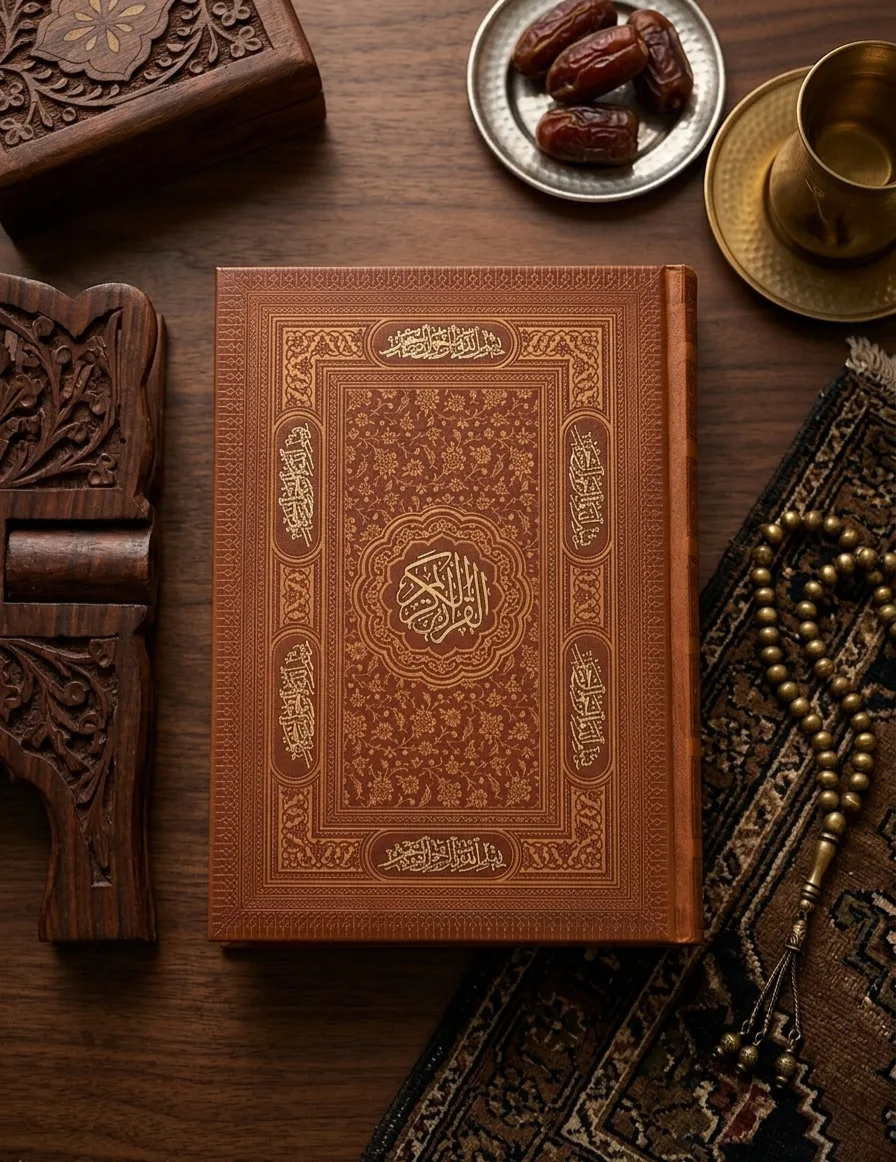
The Qur'an
The Quran
It is not a chronological story but a guide covering various aspects of life. It includes stories of past prophets (like Noah, Abraham, Moses, and Jesus), ethical guidelines, laws for social justice, and poetic descriptions of the universe and the Creator.
Standardization of the The Quran 650–652 CE: The third caliph, Uthman, established the standardized written form (the Uthmanic Codex) to ensure unity in recitation across the expanding Islamic world.
The central theme is Tawhid (the oneness of God), alongside calls for prayer, charity, patience, and moral integrity.
this book will lead people from ignorance toward enlightenment, acting as a clear map for personal and social conduct, also it purpose is To call humanity to worship one God alone, repairing the relationship between the Creator and His creation.
The Quran presents a comprehensive worldview centered on several core pillars:
-Universal Human Dignity (Karama): It envisions a world where every individual is born with inherent honor, irrespective of race, gender, or status.
-A Just and Balanced Society (Ummah): It calls for a righteous community built on social justice, economic fairness, and the protection of the vulnerable (orphans, the poor, and the needy).
-Life as a Moral Test: It frames human existence as a temporary trial where actions have eternal consequences in the hereafter, encouraging believers to "strive as in a race in all virtues".
-Universal Citizenship: It promotes a "universal brotherhood" that transcends tribalism, nationalism, and racism, linking the individual to the entire human family.
The Quran is believed by Muslims to be the literal word of God (Allah) as revealed to the Prophet Muhammad. It is divided into 114 chapters (Surahs) that vary in length and topic.
In stock: 2 copies